 |
Xfem
The Xfem Plugin
|
Loading...
Searching...
No Matches
|
Xfem
The Xfem Plugin
|
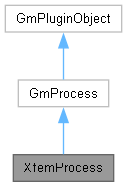
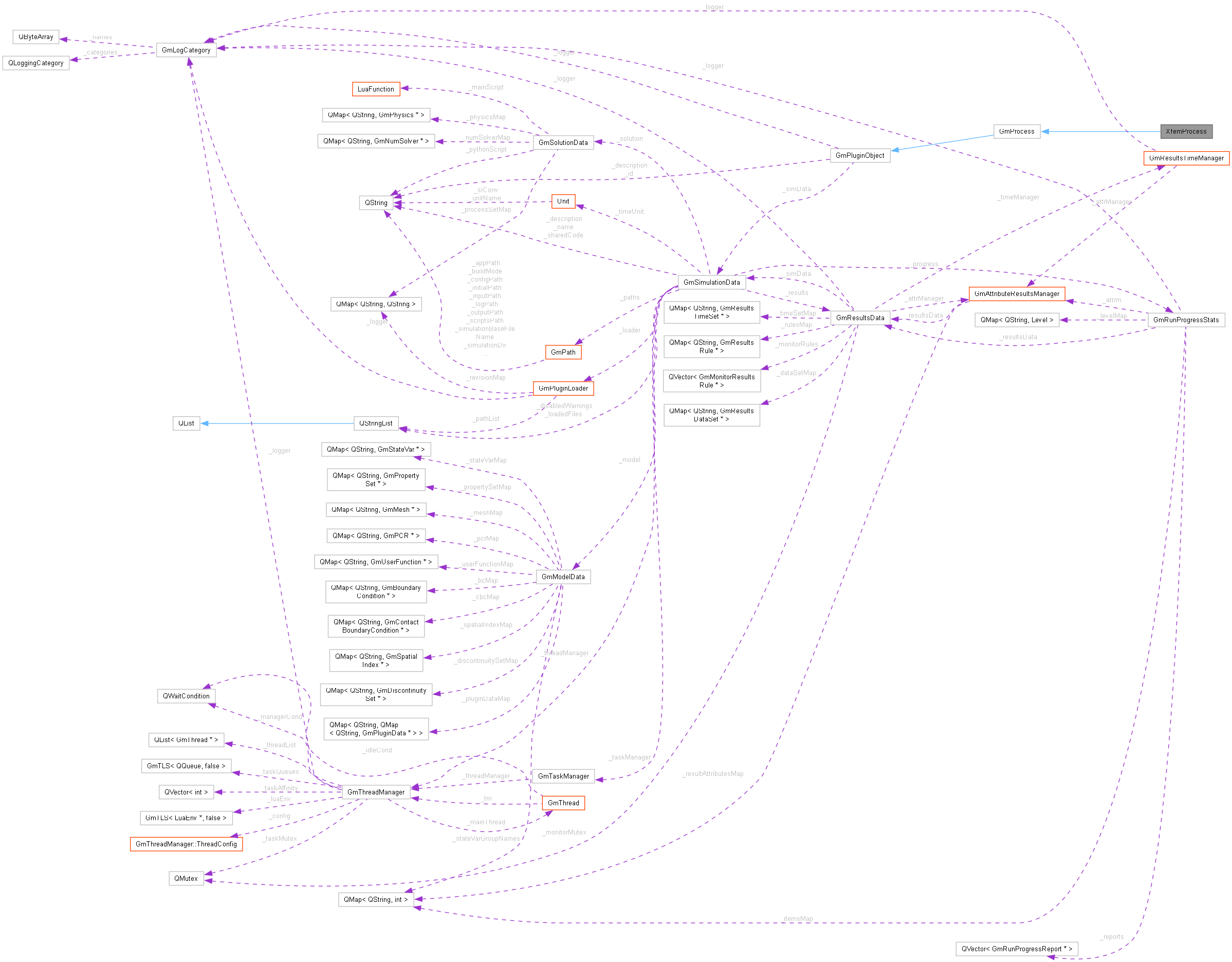
Basic class for the XFEM Process plugin object. More...
#include <xfemProcess.h>
Public Member Functions | |
| XfemProcess (GmSimulationData *simulation, QString id, QString description, const GmLogCategory &logger) | |
| Constructor. Will be called by the plugin loading code. | |
| virtual | ~XfemProcess () |
| Destructor. | |
| virtual const char * | pluginName () const |
| virtual const char * | pluginType () const |
| virtual void | loadFunctions (LuaTable &table) |
| virtual QStringList | functionList () const |
 Public Member Functions inherited from GmProcess Public Member Functions inherited from GmProcess | |
| GmProcess (GmSimulationData *simulation, QString id, QString description, const GmLogCategory &logger) | |
| virtual const char * | pluginCategory () const |
| virtual bool | loadPrivateData (LuaTable &table) |
| virtual void | printParameters (const GmLogCategory &logger) |
| int | createProgressStatsItem (GmRunProgressStats *ps, const char *name) |
| Public Member Functions inherited from GmPluginObject | |
| GmPluginObject (GmSimulationData *simulation, QString id, QString description, const GmLogCategory &logger) | |
| QString | id () const |
| QString | description () const |
| QString | pluginTypeName () const |
Private Member Functions | |
| GmProcessMethodRedirector< XfemProcess >::MethodRegistry * | processMethodTable () const |
| Returns the table storing the process exported function names / methods. | |
| void | xfemParseParameters (lua_State *L, XfemOptions *xfemOptions) |
| bool | parseAttributeTable (lua_State *L, int index, QString fname, QStringList &attrList) |
| Auxilliary function used to parse a table parameter describing attribute names. | |
| int | init (lua_State *L) |
| The xfem.init() process implementation. | |
| int | step (lua_State *L) |
| int | printSubElements (lua_State *L) |
| The xfem.printSubElements() process implementation. | |
| int | printSubElementsGaussData (lua_State *L) |
| The xfem.printSubElementsGaussData() process implementation. | |
| int | copyToElementMesh (lua_State *L) |
| The xfem.copyToElementMesh() process implementation. | |
| int | geostatic (lua_State *L) |
| Runs a Geostatic step to initialize the in-situ conditions. | |
Additional Inherited Members | |
| Protected Member Functions inherited from GmProcess | |
| void | registerFunctions (LuaTable &table, typename GmProcessMethodRedirector< T >::MethodRegistry *methods, bool noProgressStats=false) |
| QStringList | buildFunctionList (typename GmProcessMethodRedirector< T >::MethodRegistry *methods) const |
| Protected Member Functions inherited from GmPluginObject | |
| virtual const GmLogCategory & | logger () const |
| GmSimulationData * | simulationData () const |
Basic class for the XFEM Process plugin object.
|
private |
The xfem.copyToElementMesh() process implementation.
Expects to receive as parameters: 1 - The mesh name or a Lua XFem mesh object with the source mesh 2 - The mesh name or a Lua element mesh object with the empty destination mesh 3 - The Xfem solver object. This is needed for interpolations, specially when splitFractures is true. This parameter can be NULL, mainlly for test purposes, and in that case, interpolations won't consider the enrichments. 4 - The name of the node value to be exported or a list with the names of values (state vars and/or attributes ). Can be nil. 5 - The name of the element value to be exported or a list with the names of values (cell attributes and/or Gauss attributes). Can be nil. 6 - A table with a set of copy options. Accepted flags are:
|
inlinevirtual |
Implements GmProcess.
|
private |
The xfem.init() process implementation.
This function expects to receive as parameters in the Lua stack:
1) A string with the physical method id or a table with multiple method ids. All methods must share the same XFem mesh 2) A string with the solver id that will be used to solve the linear system 3) An optional pair of tables with print and solver options as described in GmpFemProcess::solve()
|
private |
Auxilliary function used to parse a table parameter describing attribute names.
The parameter containing the values description should be in the Lua stack in the index position. It should be a string with the name of the value to or a list with the names of values. Can be nil.
If the parameter at index is nil or missing, the function returns false. On errors, the function does not return, throwing a message using lua_error()
| L | The Lua state |
| index | Position in the stack with the value list description |
| fname | The name of the called function, used on error messages |
| attrList | List filled with value names |
|
inlinevirtual |
Implements GmPluginObject.
|
inlinevirtual |
Implements GmPluginObject.
|
private |
The xfem.printSubElements() process implementation.
Expects to receive as parameters on the Lua stack: 1 - A string with the mesh name or an XfemLuaMesh proxy object 2 - An optional table with print options. Each option is a boolean flag or numeric value associated to a table field. Available options are: 'line_numbers' – Should we print line numbers on the left margin? Default = true 'active_only' – Should we print only active cells? Default = true 'clip_title' – Should we clip column titles when the user gave us a width and the title is bigger than that? Default = true 'header_title' – Should we print a title in the header, for the entire table? Default = false 'trailler' – Should we add a closing trailler line to the table? Default = false 'cartesian' – Should we print cartesian coordinates for sub-element vertices instead of natural coordinates? Default = false. 'num_gauss' – Should we print a column with the number of Gauss points in the sub-element? Default = false. When filling this table, keep in mind that only options different from the default are needed. When an option is not present in the table its default value will be used.
|
private |
The xfem.printSubElementsGaussData() process implementation.
Expects to receive as parameters on the Lua stack: 1 - A string with the mesh name or an XfemLuaMesh proxy object 2 - A string or a table with Gauss attributes. If empty, all data will be printed. The strings 'type', 'points', subnumber' and 'subtype' can be included in the table to request that, respectively, cell types, cell Gauss points, sub-element number and sub-element type should also be printed. If present, those should be the first entries of the table. Optionally, value names can have a suffix surrounded by () with the desired unit (ex: T(K) would ask for a temperature value named T and with values converted, if needed, to Kelvin degrees). 3 - An optional table with print options. Each option is a boolean flag or numeric value associated to a table field. Available options are: 'state' – The state number used to find values when the attribute/ state var has an associated history. Default = 0 (present state) If the state is invalid for an accessor, the default will be used for it. 'units' – Should we print units in column title? Default = true 'unit_line' – Should we print units in the header in a separate line? Default = false 'eval_functions' – Should we evaluate functions or do we print its name? Default = false 'def_nil' – Should we print default values as 'nil'? Default = false 'line_numbers' – Should we print line numbers on the left margin? Default = true 'active_only' – Should we print only active cells? Default = true 'clip_title' – Should we clip column titles when the user gave us a width and the title is bigger than that? Default = true 'header_title' – Should we print a title in the header, for the entire table? Default = false 'trailler' – Should we add a closing trailler line to the table? Default = false When filling this table, keep in mind that only options different from the default are needed. When an option is not present in the table its default value will be used. 4 - An optional table with column widths. If present, entry 'i' will define the column width for the attribute at entry 'i' in the attributes table (skipping special columns like those given by 'type', 'nodes', 'properties' and 'points' which currently can't have their sizes specified)
 1.12.0