 |
GemaCoreLib
The GeMA Core library
|
Loading...
Searching...
No Matches
|
GemaCoreLib
The GeMA Core library
|
A class used to store time, memory and additional values statistics related to the simulation loading and execution. More...
#include <gmRunProgressStats.h>
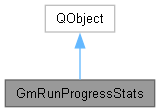
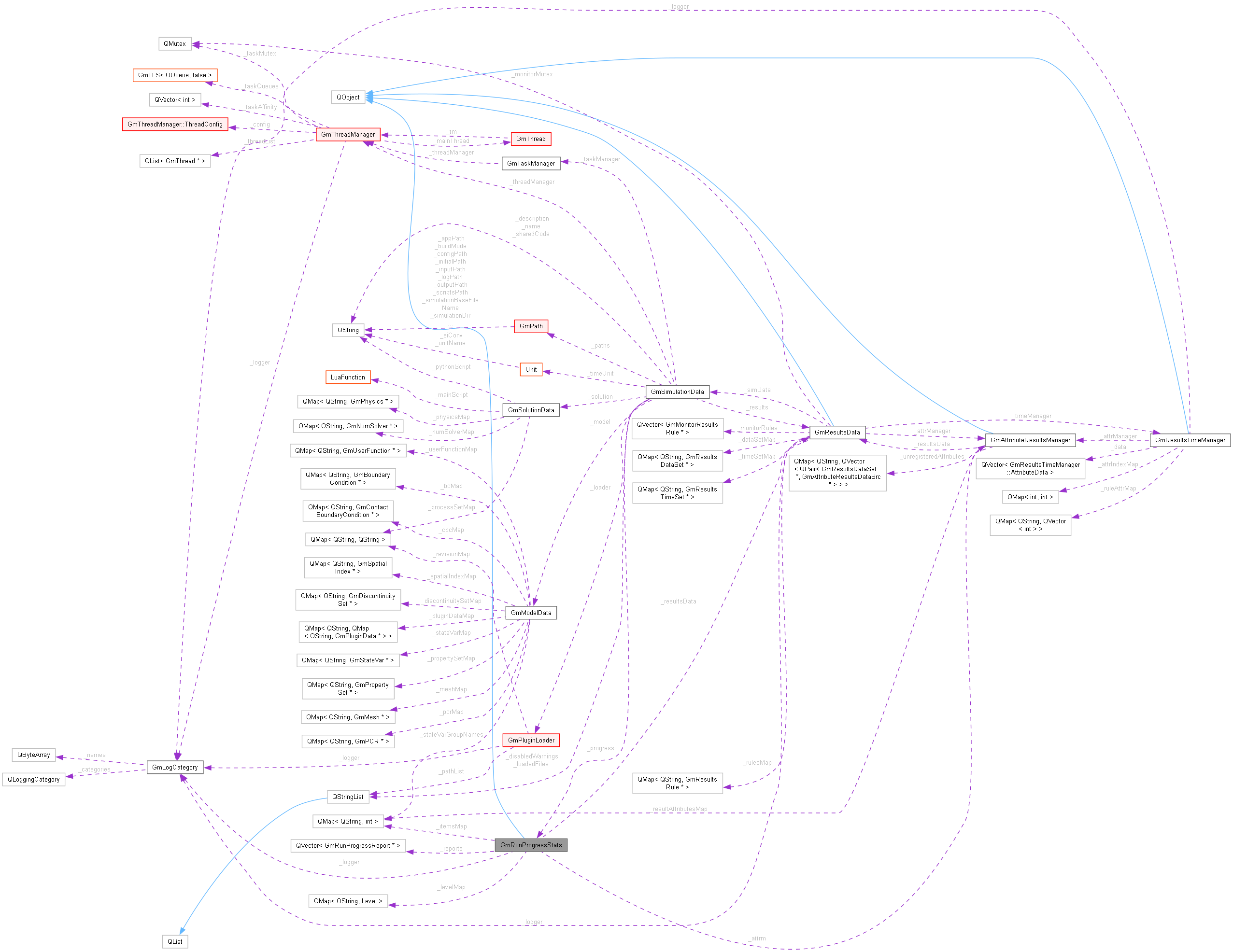
Public Types | |
| enum | Level { GM_RUNPROG_DISABLED , GM_RUNPROG_NS_SP , GM_RUNPROG_NS_DP , GM_RUNPROG_DS_SP , GM_RUNPROG_DS_DP , GM_RUNPROG_NUM_LEVELS } |
| enum | TrackOptions { GM_RUNPROG_TRACK_TIME = 0x0001 , GM_RUNPROG_TRACK_MEM = 0x0002 , GM_RUNPROG_TRACK_REPORT_AT_END = 0x0004 , GM_RUNPROG_TRACK_REPORT_STATS = 0x0008 , GM_RUNPROG_TRACK_STATS_MIN = 0x0010 , GM_RUNPROG_TRACK_STATS_MAX = 0x0020 , GM_RUNPROG_TRACK_STATS_AVG = 0x0040 , GM_RUNPROG_TRACK_STATS_TOTAL = 0x0080 , GM_RUNPROG_TRACK_STATS_ALL = 0x00F0 , GM_RUNPROG_TRACK_ATTR_DEFAULT = 0x0100 , GM_RUNPROG_TRACK_DEFAULT } |
 Public Types inherited from QObject Public Types inherited from QObject | |
| typedef | QObjectList |
Public Slots | |
| void | removeRegisteredItems (QObject *owner) |
| Removes all the items belonging to the given owner. | |
Public Member Functions | |
| GmRunProgressStats (GmResultsData *resultsData) | |
| The constructor. | |
| ~GmRunProgressStats () | |
| Destructor. | |
| int | registerItem (const QObject *owner, int fatherItemId, QString name, int options=GM_RUNPROG_TRACK_DEFAULT, QString autoId="") |
| Registers a NEW item identified by its name. Returns the item id or -1 in case of errors. The full item name is composed by the given name prefixed by its father name (if there is a father) and, if necessary, suffixed by an auto id that makes the name unique. See the details below. | |
| QString | itemName (int itemId) const |
| Returns the given item name. | |
| int | findItem (int fatherItemId, QString name) const |
| Returns the item id if a registered item composed by the father name and the given name already exists, -1 otherwise. | |
| bool | renameItem (int itemId, QString autoId) |
| Renames an item, if possible, to include the given autoId on its name. Expects that the item doesn't already has an autoId part. Returns false if it does. Also, if the added autoId turns the name into an existing name, returns false. Renaming also affects all of the item attributes and is also applied recursively to any item child and their attributes. | |
| bool | validItemId (int itemId) const |
| Returns true if the given id is a valid item id. | |
| const QObject * | itemOwner (int itemId) const |
| Returns the item owner, if any. | |
| void | setItemData (int itemId, void *data) |
| Stores on item the given user data. Can be used by report user functions to inferr an item "semantics". | |
| void | registerNestedItem (int trackingItemId, int trackedItemId) |
| Defines that the father item (identified by trackingItemId) will automatically track totals for the attributes existing in the given nested item (trackedItemId). | |
| int | registerAttribute (int itemId, QString name, QString description, Unit unit, int nlin, int ncol, QString format, int statOptions=GM_RUNPROG_TRACK_ATTR_DEFAULT) |
| Registers a new value attribute for the given item. | |
| int | registerScalarAttribute (int itemId, QString name, QString description, Unit unit, QString format, int statOptions=GM_RUNPROG_TRACK_ATTR_DEFAULT) |
| Registers a scalar attribute. | |
| int | registerCounterAttribute (int itemId, QString name, QString description, int statOptions=GM_RUNPROG_TRACK_ATTR_DEFAULT) |
| Registers a counter attribute, always printed as an integer value. | |
| int | registerStringAttribute (int itemId, QString name, QString description, int statOptions=GM_RUNPROG_TRACK_ATTR_DEFAULT) |
| Registers a string attribute. | |
| int | attr (int itemId, int attrId) const |
| Returns the global results data attribute id for the given item id, local attribute id pair. | |
| GmAttributeResultsManager * | attrManager () const |
| Returns the global attribute manager. | |
| int | findAttribute (int itemId, QString name) const |
| Returns the LOCAL id of the attribute identified by its parent item and attribute name. Returns -1 if not found. | |
| int | findAttribute (int itemId, int nestedId, QString name) const |
| Returns the id of the attribute identified by its parent item, nested item id and attribute name. Returns - 1 if not found or if nestedId is - 1. | |
| int | autoTimeItemAttribute (int itemId) const |
| Returns the LOCAL attribute id for the automatic time attribute or -1 if there is none. | |
| int | autoMemItemAttribute (int itemId) const |
| Returns the LOCAL attribute id for the automatic memory attribute or -1 if there is none. | |
| GmRunProgressReport * | addNewReport (QString title, QString fileName, bool itemColumn=false) |
| Creates a new report to be saved on the given file. | |
| void | addReportToItem (GmRunProgressReport *report, int itemId, QString itemReportDescription) |
| Defines that the given item provides data for the given report. | |
| GmRunProgressReport * | report (QString fileName) const |
| Returns a pointer to the report saving information to the given file. Returns NULL if there is none. | |
| void | itemStart (int itemId) |
| Notifies the progress object that the operation tied to the given item is about to start. | |
| void | itemEnd (int itemId) |
| Notifies the progress object that the operation tied to the given item has just finished. | |
| QString | strAttributeValue (int itemId, int attrId) const |
| Returns the current value for a string attribute. | |
| const double * | numericAttributeValue (int itemId, int attrId) const |
| Returns the current value for a numeric attribute. | |
| void | setAttributeValue (int itemId, int attrId, double val) |
| Sets the value for a scalar result attribute identified by its id (returned by registerAttribute()) | |
| void | setAttributeValue (int itemId, int attrId, double val1, double val2) |
| Sets the value for a vector[2] result attribute identified by its id (returned by registerAttribute()) | |
| void | setAttributeValue (int itemId, int attrId, double val1, double val2, double val3) |
| Sets the value for a vector[3] result attribute identified by its id (returned by registerAttribute()) | |
| void | setAttributeValue (int itemId, int attrId, const double *val) |
| Sets the value for a multi valued attribute identified by its id (returned by registerAttribute()). Assumes that the given vector has size equal to the registered size. The values are copied. | |
| void | setAttributeValue (int itemId, int attrId, const GmVector &val) |
| Sets the value for a vector valued attribute identified by its id (returned by registerAttribute()). Assumes that the given vector has size equal to the registered size. The values are copied. | |
| void | setAttributeValue (int itemId, int attrId, const GmMatrix &val) |
| Sets the value for a matrix valued attribute identified by its id (returned by registerAttribute()). Assumes that the given vector has size equal to the registered size. The values are copied. | |
| void | setAttributeValue (int itemId, int attrId, int val) |
| Sets the value for a counter attribute identified by its id (returned by registerCounterAttribute()) | |
| void | setAttributeValue (int itemId, int attrId, unsigned val) |
| Sets the value for a counter attribute identified by its id (returned by registerCounterAttribute()) | |
| void | setAttributeValue (int itemId, int attrId, QString val) |
| Sets the value for a string attribute identified by its id (returned by registerStringAttribute()) | |
| void | setAttributeValue (int itemId, int attrId, const char *val) |
| Sets the value for a string attribute identified by its id (returned by registerStringAttribute()) | |
| void | incAttributeValue (int itemId, int attrId) |
| Increments the current value of a "counter" attribute, doing the equivalent of attr = attr + 1. | |
| void | decAttributeValue (int itemId, int attrId) |
| Decrements the current value of a "counter" attribute, doing the equivalent of attr = attr - 1. | |
| void | reportStats (QString finalStatusStr, qint64 runTime) |
| Shows the final statistics report for all the configured items. | |
| void | csvStats (QString csvFile, bool add, bool totalOnly, const QStringList &filters, QString simName, qint64 runTime) |
| Saves the contents of the statistics report to a csv file. | |
| void | removeRegisteredItem (int itemId) |
| Removes the given registered item. | |
| Public Member Functions inherited from QObject | |
| virtual const QMetaObject * | metaObject () const const |
| QObject (QObject *parent) | |
| virtual bool | event (QEvent *e) |
| virtual bool | eventFilter (QObject *watched, QEvent *event) |
| QString | objectName () const const |
| void | setObjectName (const QString &name) |
| bool | isWidgetType () const const |
| bool | isWindowType () const const |
| bool | signalsBlocked () const const |
| bool | blockSignals (bool block) |
| QThread * | thread () const const |
| void | moveToThread (QThread *targetThread) |
| int | startTimer (int interval, Qt::TimerType timerType) |
| int | startTimer (std::chrono::milliseconds time, Qt::TimerType timerType) |
| void | killTimer (int id) |
| T | findChild (const QString &name, Qt::FindChildOptions options) const const |
| QList< T > | findChildren (const QString &name, Qt::FindChildOptions options) const const |
| QList< T > | findChildren (const QRegExp ®Exp, Qt::FindChildOptions options) const const |
| QList< T > | findChildren (const QRegularExpression &re, Qt::FindChildOptions options) const const |
| const QObjectList & | children () const const |
| void | setParent (QObject *parent) |
| void | installEventFilter (QObject *filterObj) |
| void | removeEventFilter (QObject *obj) |
| QMetaObject::Connection | connect (const QObject *sender, const char *signal, const char *method, Qt::ConnectionType type) const const |
| bool | disconnect (const char *signal, const QObject *receiver, const char *method) const const |
| bool | disconnect (const QObject *receiver, const char *method) const const |
| void | dumpObjectTree () |
| void | dumpObjectInfo () |
| void | dumpObjectTree () const const |
| void | dumpObjectInfo () const const |
| bool | setProperty (const char *name, const QVariant &value) |
| QVariant | property (const char *name) const const |
| QList< QByteArray > | dynamicPropertyNames () const const |
| void | destroyed (QObject *obj) |
| void | objectNameChanged (const QString &objectName) |
| QObject * | parent () const const |
| bool | inherits (const char *className) const const |
| void | deleteLater () |
| Q_DISABLE_COPY (Class) | |
| Q_DISABLE_MOVE (Class) | |
| Q_DISABLE_COPY_MOVE (Class) | |
| T | qobject_cast (QObject *object) |
| T | qobject_cast (const QObject *object) |
| T | qFindChild (const QObject *obj, const QString &name) |
| QList< T > | qFindChildren (const QObject *obj, const QString &name) |
| QList< T > | qFindChildren (const QObject *obj, const QRegExp ®Exp) |
| Q_CLASSINFO (Name, Value) | |
| Q_INTERFACES (...) | |
| Q_PROPERTY (...) | |
| Q_ENUMS (...) | |
| Q_FLAGS (...) | |
| Q_ENUM (...) | |
| Q_FLAG (...) | |
| Q_ENUM_NS (...) | |
| Q_FLAG_NS (...) | |
| Q_OBJECT Q_OBJECT | |
| Q_GADGET Q_GADGET | |
| Q_NAMESPACE Q_NAMESPACE | |
| Q_NAMESPACE_EXPORT (EXPORT_MACRO) | |
| Q_SIGNALS Q_SIGNALS | |
| Q_SIGNAL Q_SIGNAL | |
| Q_SLOTS Q_SLOTS | |
| Q_SLOT Q_SLOT | |
| Q_EMIT Q_EMIT | |
| Q_INVOKABLE Q_INVOKABLE | |
| Q_REVISION Q_REVISION | |
| Q_SET_OBJECT_NAME (Object) | |
| QT_NO_NARROWING_CONVERSIONS_IN_CONNECT QT_NO_NARROWING_CONVERSIONS_IN_CONNECT | |
Static Public Member Functions | |
| static void | setLevelConfiguration (QString item, Level level) |
| Sets the level configuration for an item. Should be called before item creation. Intended usage is to define defaults for the item level on simulator startup. If item is equal to ":default", an invalid item name, updates the global default value. | |
| static Level | defLevel () |
| Returns the default level. | |
| static Level | configuredLevel (QString item) |
| The configured level for the given item. Can be used to choose the appropriate track options depending on the requested level. | |
| static int | itemOptionsFromLevel (QString item, bool mem=false, bool *detailedStats=NULL) |
| Returns the default Track options adjusted by the item level. If detailedStats is not NULL, it will be filled with true for DS_SP or DS_DP levels, false otherwise. | |
| Static Public Member Functions inherited from QObject | |
| QString | tr (const char *sourceText, const char *disambiguation, int n) |
| QString | trUtf8 (const char *sourceText, const char *disambiguation, int n) |
| QMetaObject::Connection | connect (const QObject *sender, const char *signal, const QObject *receiver, const char *method, Qt::ConnectionType type) |
| QMetaObject::Connection | connect (const QObject *sender, const QMetaMethod &signal, const QObject *receiver, const QMetaMethod &method, Qt::ConnectionType type) |
| QMetaObject::Connection | connect (const QObject *sender, PointerToMemberFunction signal, const QObject *receiver, PointerToMemberFunction method, Qt::ConnectionType type) |
| QMetaObject::Connection | connect (const QObject *sender, PointerToMemberFunction signal, Functor functor) |
| QMetaObject::Connection | connect (const QObject *sender, PointerToMemberFunction signal, const QObject *context, Functor functor, Qt::ConnectionType type) |
| bool | disconnect (const QObject *sender, const char *signal, const QObject *receiver, const char *method) |
| bool | disconnect (const QObject *sender, const QMetaMethod &signal, const QObject *receiver, const QMetaMethod &method) |
| bool | disconnect (const QMetaObject::Connection &connection) |
| bool | disconnect (const QObject *sender, PointerToMemberFunction signal, const QObject *receiver, PointerToMemberFunction method) |
Private Member Functions | |
| Q_DISABLE_COPY (GmRunProgressStats) | |
| int | attr (const GmRunProgressStatsItem *item, int attrId) const |
| Returns the global results data attribute id for the given item id, local attribute id pair. | |
| QString | parseItemName (int fatherId, QString name, QString autoId) const |
| Helper function used by registerItem() to produce the adjusted item name due to its father and autoId, following the rules documented on registerItem(). | |
| int | registerAttribute (GmRunProgressStatsItem *item, QString name, QString description, Unit unit, int nlin, int ncol, QString format, int statOptions) |
| Registers a new value attribute for the given item. | |
| void | csvStatsFillReportData (bool totalOnly, const QStringList &filters, qint64 runTime, QStringList &attrList, QStringList &unitList, QStringList &dataList) const |
| Helper function to produce the data from this simulation that will be exported to the csv file. | |
| bool | csvStatsParseReportData (QString fileName, QString attrHeader, QString unitHeader, int numDataCols, QString dataHeader, QStringList &attrList, QStringList &unitList, QStringList &dataList, QStringList &nameList) const |
| Helper function to parse existing data from a previous csv file that will be appended to. | |
| QString | itemStr (const GmRunProgressStatsItem *item, int attrId) const |
| Returns a formatted string with the value for an item attribute. Format: name = value unit. | |
| QString | itemStatStr (const GmRunProgressStatsItem *item, int attrId) const |
| Returns a formated string with the stored statistics for an item attribute. Format: name = {total=val, avg=val, min=val, max=val} unit. | |
| void | addReportTraillers () const |
| Add closing trailler data to existing reports. | |
Private Attributes | |
| GmResultsData * | _resultsData |
| The results data object storing item attributes. | |
| GmAttributeResultsManager * | _attrm |
| The attribute manager (from _resultsData) | |
| GmLogCategory | _logger |
| The logger object used to emit messages when logging to the standard log file. | |
| QtPtrList< GmRunProgressStatsItem > | _items |
| The set of registered items. Might include NULL entries! | |
| QMap< QString, int > | _itemsMap |
| Maps item names to their position on _items. | |
| QVector< GmRunProgressReport * > | _reports |
| The set of added reports, owned by the progress object. | |
Static Private Attributes | |
| static QMap< QString, Level > | _levelMap |
| The map with item level configuration. Filled BEFORE item creation and used to init item levels. | |
| static Level | _defLevel = GmRunProgressStats::GM_RUNPROG_NS_SP |
| The default level for entries that are not present on _levelMap. | |
Additional Inherited Members | |
| Protected Member Functions inherited from QObject | |
| QObject * | sender () const const |
| int | senderSignalIndex () const const |
| int | receivers (const char *signal) const const |
| bool | isSignalConnected (const QMetaMethod &signal) const const |
| virtual void | timerEvent (QTimerEvent *event) |
| virtual void | childEvent (QChildEvent *event) |
| virtual void | customEvent (QEvent *event) |
| virtual void | connectNotify (const QMetaMethod &signal) |
| virtual void | disconnectNotify (const QMetaMethod &signal) |
| Properties inherited from QObject | |
| objectName | |
A class used to store time, memory and additional values statistics related to the simulation loading and execution.
| Enumerator | |
|---|---|
| GM_RUNPROG_DISABLED | No statistics at all. |
| GM_RUNPROG_NS_SP | Normal statistics, Summary printing. The default if not changed by a call to setLevelConfiguration() |
| GM_RUNPROG_NS_DP | Normal statistics, Detailed printing. |
| GM_RUNPROG_DS_SP | Detailed statistics, Summary printing. |
| GM_RUNPROG_DS_DP | Detailed statistics, Detailed printing. |
| Enumerator | |
|---|---|
| GM_RUNPROG_TRACK_TIME | Should we track the item execution time (between calls to itemStart() and itemEnd())? |
| GM_RUNPROG_TRACK_MEM | Should we track the memory used by the item? |
| GM_RUNPROG_TRACK_REPORT_AT_END | Should the item report values at the call to itemEnd()? |
| GM_RUNPROG_TRACK_REPORT_STATS | Should the item collect statistics? |
| GM_RUNPROG_TRACK_STATS_MIN | Should the minimum value be reported on the attribute statistics? For items, represents the attribute default. |
| GM_RUNPROG_TRACK_STATS_MAX | Should the maximum value be reported on the attribute statistics? For items, represents the attribute default. |
| GM_RUNPROG_TRACK_STATS_AVG | Should the average value be reported on the attribute statistics? For items, represents the attribute default. |
| GM_RUNPROG_TRACK_STATS_TOTAL | Should the sum of the values be reported on the attribute statistics? For items, represents the attribute default. |
| GM_RUNPROG_TRACK_STATS_ALL | Equivalent to the stat flags: MIN + MAX + AVG + TOTAL. |
| GM_RUNPROG_TRACK_ATTR_DEFAULT | For attribute registration, defines that its should follow the item default. |
| GM_RUNPROG_TRACK_DEFAULT | The default track settings. |
| GmRunProgressReport * GmRunProgressStats::addNewReport | ( | QString | title, |
| QString | fileName, | ||
| bool | itemColumn = false ) |
Creates a new report to be saved on the given file.
The given file name can contain path macros. The itemColumn flag define if the report includes a first column with the item name or not.
| void GmRunProgressStats::csvStats | ( | QString | csvFile, |
| bool | add, | ||
| bool | totalOnly, | ||
| const QStringList & | filters, | ||
| QString | simName, | ||
| qint64 | runTime ) |
Saves the contents of the statistics report to a csv file.
| csvFile | The file name. Can contain path macros. |
| add | If set to true, instead of creating a new file, adds the data columns to an existing file, matching the lines against existing lines and creating new ones when needed. param totalOnly If set to true, only the total statistics will be addede to the set of data columns |
| filters | If not empty, only the item attributes present on the given list will be saved |
| simName | The "name" of the current simulation to be used as "header" for the new columns |
| runTime | The total time (in ms) of the simulation run. |
|
static |
Returns the default Track options adjusted by the item level. If detailedStats is not NULL, it will be filled with true for DS_SP or DS_DP levels, false otherwise.
For DISABLED, returns 0 For NS_SP, returns DEFAULT For NS_DP, returns DEFAULT | REPORT_AT_END For DS_SP, returns DEFAULT ored with MEM if mem is true For DS_DP, returns DEFAULT | REPORT_AT_END ored with MEM if mem is true
|
private |
Helper function used by registerItem() to produce the adjusted item name due to its father and autoId, following the rules documented on registerItem().
Returns the new item name already made unique. If the name is invalid (badly formed), or on error making it unique, returns the empty string.
|
private |
Registers a new value attribute for the given item.
Follows the protocol for attribute registering defined by GmResultsData::registerResultAttribute(). Please see that method description. Uses the item object referenced by itemId as the attribute owner.
Returns an attribute index that is LOCAL to the item.
|
inline |
Registers a new value attribute for the given item.
Follows the protocol for attribute registering defined by GmResultsData::registerResultAttribute(). Please see that method description. Uses the item object referenced by itemId as the attribute owner.
Returns an attribute index that is LOCAL to the item.
| int GmRunProgressStats::registerItem | ( | const QObject * | owner, |
| int | fatherItemId, | ||
| QString | name, | ||
| int | options = GM_RUNPROG_TRACK_DEFAULT, | ||
| QString | autoId = "" ) |
Registers a NEW item identified by its name. Returns the item id or -1 in case of errors. The full item name is composed by the given name prefixed by its father name (if there is a father) and, if necessary, suffixed by an auto id that makes the name unique. See the details below.
To make item names unique, an "[auto_id]" suffix is appended to the name when necessary to make it unique. The auto_id suffix is given by the autoId parameter. If autoId is empty or the name with the previous suffix is still not unique, a unique numeric value is inserted into the autoId string. If that is still not unique, returns -1 on error.
If the autoId parameter is not empty, the autoId will always be added to the name in order to provide previsibility to the resulting name.
| owner | The object that contains this item. If owner is different from NULL, the item will be automatically removed from the item list when the owner object is destroyed. |
| name | The item name. If a father item was provided, the item name will be composed by the father name + '.' + given name + the optional auto id part as explained above. Names should NOT contain ., :, [ or ] characters. |
| fatherItemId | The id of the father item or -1 if there is none. |
| options | The item options. It is a or of the desired flags from the TrackOptions enum. |
| autoId | The additional id added to the item name, as explained above |
| void GmRunProgressStats::registerNestedItem | ( | int | trackingItemId, |
| int | trackedItemId ) |
Defines that the father item (identified by trackingItemId) will automatically track
totals for the attributes existing in the given nested item (trackedItemId).
If the trackedItemId is -1, the call is silently ignored. No checking is done for duplicate calls, so don't do it!
| void GmRunProgressStats::reportStats | ( | QString | finalStatusStr, |
| qint64 | runTime ) |
Shows the final statistics report for all the configured items.
Given parameters are extra information presented at the summary at the end of the report: The final simulation status and the total time (in ms) of the simulation run.
 1.12.0